
Best LGA1151 Motherboards 2026: 9 Picks by Specs
The Supermicro X11SSH-LN4F is our top pick for LGA1151 systems, offering a server-grade micro ATX board with an Intel chipset that suits always-on builds, thanks to its reliability-focused design. We compared nine available LGA1151 motherboards on socket compatibility, form factor, RAM type, and stated features like M.2 slots, LAN ports, and ECC support, to help you find the right board for gaming, NAS, or budget builds.
9 picks from 2 motherboards that match this guide with a price we can quote today. The prices below are current and each carries its read time.
Quick picks
The best fit for you
- For esports on a budget: If you're building a budget gaming rig with an 8th or 9th gen Intel CPU, the LAISANIM B360M offers a compact micro ATX board with DDR4 and NVMe support at a low cost. See pick 6
- For NAS builders: The N17 NAS motherboard stands out with four 2.5G LAN ports and eight SATA3 connectors, making it ideal for a high-capacity home NAS. See pick 4
- For server admins: The Supermicro X11SSH-LN4F is a genuine server board with an Intel chipset, designed for 24/7 operation in small server racks or workstations. See pick 1
- For crypto miners: The Biostar TB360-BTC D+ supports up to 8 GPUs and uses SODIMM DDR4 memory, making it a specialized choice for large mining rigs. See pick 5
Our 9 picks
1 Best overall

This is the only genuine server-grade motherboard in the list, from a well-known brand. Its mATX form factor and Intel chipset make it a dependable base for home servers or workstations, and it stands out for its reliability-oriented design.
Pros
- mATX form factor for compact builds
- Intel chipset for broad processor support
- Server-oriented naming suggests 24/7 operation
- Retail pack with standard accessories
Cons
- RAM type not stated by the seller
- No processor compatibility list given
- Not suited for gaming or overclocking
Good fit if
- Home lab operators and small business servers
- Users building a low-power always-on system
Skip if
- You need gaming features like RGB or overclocking
- You want a board with many M.2 slots or USB-C
Verdict: A reliable server-grade LGA1151 board for those who value stability over consumer features.
2 Best for gaming

Mother Board Fit for ASROCK Z390 Phantom Gaming 4/AC Z390 Motherbaord
- Socket
- LGA1151
- Form factor
- ATX
- Memory type
- DDR4
This third-party board is designed to match the ASRock Z390 Phantom Gaming 4/AC layout, offering an ATX form factor with DDR4 support up to 64GB and PCIe 3.0. It's the strongest candidate here for a gaming PC build.
Pros
- ATX form factor for expansion
- Supports DDR4 up to 64GB (from name)
- PCIe 3.0 for modern graphics cards
- Gaming-oriented naming
Cons
- Third-party 'Fit for' product, not genuine ASRock
- No stated M.2 or SATA ports
- Chipset compatibility not specified
Good fit if
- Gamers building an LGA1151 system with a current GPU
- Users who need a full-size ATX board
Skip if
- You prefer genuine branded boards
- You need multiple M.2 slots or advanced features
Verdict: A cost-effective way to get an ATX LGA1151 gaming board, but verify it is a third-party replacement.
3 Best micro ATX gaming

Gaming Motherboard Fit for ASUS Maximus VIII Gene Intel Z170 Motherboard
- Socket
- LGA1151
- Form factor
- mATX
- Memory type
- DDR4
$221.74 price as of 2026-10-07 05:57 UTC (Details)
This compact board mimics the ASUS Maximus VIII Gene, supporting DDR4 up to 64GB and listing specific 6th and 7th gen Intel processors. It's a space-saving option for gaming builds with older CPUs.
Pros
- mATX form factor for small cases
- Supports DDR4 up to 64GB
- Stated compatibility with listed 6th and 7th gen CPUs
- Gaming-oriented from name
Cons
- Third-party 'Fit for' product
- Only supports select processors as listed
- No PCIe version stated
Good fit if
- Users with a compact case who own a 6th or 7th gen Intel CPU
- Gamers on a tight budget
Skip if
- You have an 8th or 9th gen CPU (incompatible with Z170)
- You need an ATX board with more slots
Verdict: A compact gaming motherboard for older Intel CPUs, but check your processor against the listed models.
4 Best for NAS

N17 NAS Motherboard C246 LGA1151(Intel/C246/Mini ITX/DDR4 Support
- Socket
- LGA1151
- Form factor
- ITX
- Memory type
- DDR4
This mini ITX board is purpose-built for network-attached storage, offering a C246 chipset, ECC memory support, four 2.5G LAN ports, and eight SATA3 connectors. It's the most feature-rich option for server or NAS projects.
Pros
- Mini ITX form for small enclosures
- Supports ECC DDR4 (from name)
- 4x 2.5G LAN ports for high-speed networking
- 8x SATA3 connectors for many drives
Cons
- Limited to C246 chipset, 8th/9th gen support not explicitly stated
- No display output mentioned
- Niche use case
Good fit if
- Home NAS builders needing many drives
- Homelab users who want fast networking
Skip if
- You're building a gaming PC
- You need a mainstream desktop board
Verdict: The top pick for building a powerful NAS or server on LGA1151.
5 Best for crypto mining

Biostar TB360-BTC D+
- Socket
- LGA1151
- Memory type
- DDR4
$64.99 price as of 2026-10-07 05:33 UTC (Details) Typical price: $69.95, 7% off
This motherboard is specially designed for cryptocurrency mining, supporting up to 8 GPUs via PCIe and using SODIMM DDR4 memory. It's the only board in the list tailored for that use case.
Pros
- Supports up to 8 GPUs (from name)
- Uses SODIMM DDR4 for compact size
- Compatible with 8th and 9th gen Intel CPUs (from name)
- Low cost for multi-GPU setups
Cons
- SODIMM RAM is uncommon for desktops
- No display output likely (not stated)
- Not suitable for general desktop use
Good fit if
- Cryptocurrency miners with multiple GPUs
- Users with SODIMM RAM already on hand
Skip if
- You want to build a standard desktop
- You're a gamer or professional user
Verdict: A specialized motherboard for large-scale GPU mining, not for everyday builds.
6 Best budget micro ATX

This micro ATX board offers a low-cost way to use 8th and 9th gen Intel CPUs, with DDR4 up to 64GB and an M.2 NVMe slot. It's a solid foundation for basic desktops and budget gaming systems.
Pros
- Micro ATX form factor
- Supports DDR4 up to 64GB
- M.2 NVMe slot for fast storage
- Compatible with 8th and 9th gen Intel Core (from name)
Cons
- No PCIe version stated
- Likely limited expansion slots (not specified)
- Third-party product
Good fit if
- Budget builders who need a compact, capable board
- Users running a home office or media center
Skip if
- You need advanced overclocking or multiple M.2 slots
- You prefer a known brand
Verdict: A cost-effective micro ATX board for everyday tasks and light gaming.
7 Best budget option

Mingzhe B360M Desktop Mainboard Motherboard LGA1151 Supports 8th 9th Gen
- Socket
- LGA1151
- Memory type
- DDR4
This board supports 8th and 9th gen Intel CPUs and DDR4 memory up to 2666MHz, with dual M.2 slots. It delivers a strong feature set for a budget build, especially if you need two SSDs.
Pros
- Supports 8th and 9th gen Intel Core (from name)
- DDR4 2666MHz memory support
- Dual M.2 slots for SSDs
- Trailing '4' may indicate 4 SATA ports
Cons
- Form factor not stated by the seller
- No PCIe version mentioned
- Third-party product without brand reputation
Good fit if
- Users who need two M.2 slots on a budget
- Builders who can verify dimensions themselves
Skip if
- You require a known form factor
- You need more than 4 SATA ports
Verdict: A versatile budget board with dual M.2 support, but check the physical layout before buying.
8 Best ATX for productivity
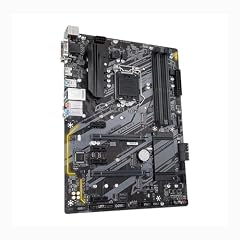
PC Upgrade Motherboard Fit for GIGABYTE B365 HD3 Motherboard Intel LGA
- Socket
- LGA1151
- Form factor
- ATX
- Memory type
- DDR4
This ATX replacement for the Gigabyte B365 HD3 offers DDR4 with an M.2 slot and legacy VGA and DVI outputs. It's well suited for office PCs or home theater setups that use older monitors.
Pros
- ATX form factor
- DDR4 support
- M.2 slot for NVMe or SATA SSD
- VGA and DVI outputs for older displays
Cons
- Third-party 'Fit for' product
- No stated RAM capacity
- Lacks modern connectivity like Wi-Fi or USB-C
Good fit if
- Users building a simple desktop with an older monitor
- Home theater PCs needing analog video output
Skip if
- Gamers who need high-speed storage or modern I/O
- Users who want a known brand
Verdict: A straightforward ATX board for basic builds with legacy display output.
9 Best for compatibility research

Despite the name referencing a Z690 board, this product is listed with an LGA1151 socket. It may offer an alternative for those seeking a gaming board with Wi-Fi in the name, but the mismatch demands careful verification.
Pros
- Name suggests gaming and Wi-Fi features
- Socket LGA1151 as listed
- Potential ROG Strix styling
Cons
- Product name conflicts with socket (Z690 is LGA1700)
- No other specifications provided
- Third-party product with unclear compatibility
Good fit if
- Users willing to verify compatibility with their CPU and case
- Those looking for a replacement with a specific layout
Skip if
- You need a reliable, well-documented motherboard
- You want a board with clear specs and support
Verdict: High risk due to naming mismatch; verify all details before purchase.
Specifications side by side
| # | Motherboard | Socket | Form factor | Memory type |
|---|---|---|---|---|
| 1 | Supermicro X11SSH-LN4F Server Motherboard | LGA1151 | mATX | not stated |
| 2 | Mother Board Fit for ASROCK Z390 Phantom Gaming 4/AC Z390 Motherbaord | LGA1151 | ATX | DDR4 |
| 3 | Gaming Motherboard Fit for ASUS Maximus VIII Gene Intel Z170 Motherboard | LGA1151 | mATX | DDR4 |
| 4 | N17 NAS Motherboard C246 LGA1151(Intel/C246/Mini ITX/DDR4 Support | LGA1151 | ITX | DDR4 |
| 5 | Biostar TB360-BTC D+ | LGA1151 | not stated | DDR4 |
| 6 | LAISANIM Micro ATX B360M Motherboard | LGA1151 | mATX | DDR4 |
| 7 | Mingzhe B360M Desktop Mainboard Motherboard LGA1151 Supports 8th 9th Gen | LGA1151 | not stated | DDR4 |
| 8 | PC Upgrade Motherboard Fit for GIGABYTE B365 HD3 Motherboard Intel LGA | LGA1151 | ATX | DDR4 |
| 9 | Motherboard Fit for ASUS ROG Strix Z690-E Gaming WiFi | not stated | not stated | not stated |
How the picks were chosen
We evaluated a pool of 10 LGA1151 motherboards and selected 9 distinct models, removing a near-duplicate. Shortlisting considered socket compatibility, form factor, RAM type, and specific use-case features like M.2 slots or ECC support. Prices are live and read from the current listing; we did not test any of the boards. Every specification comes from the product listing or the manufacturer's published data.
Picking the right one for you
Socket generation compatibility
LGA1151 has two main families: the 100/200 series chipsets (like Z170 and B150) work with 6th and 7th gen Intel Core processors, while the 300 series (such as B360, Z390, and C246) support 8th and 9th gen CPUs. The product name may mention specific generations, so check that your processor matches. Intel's processor number guide helps you identify which generation you own; look for the first digit or prefix.
Chipset features
Different chipsets offer different features. For example, Z-series boards typically allow CPU overclocking, B-series boards do not, and C-series are aimed at servers or workstations. The Intel chipset page lists the feature sets of current desktop chipsets, though LGA1151 models are older. When a board is a third-party 'Fit for' product, the chipset in the name may not be present in the actual product. Always verify the chipset from the seller's detailed specifications.
Form factor and expansion
Motherboards come in ATX, micro ATX, and mini ITX sizes. ATX boards offer the most PCIe slots and RAM slots, suitable for gaming or high-end workstations. Micro ATX balances size and expandability, while mini ITX is best for compact builds or NAS enclosures. Check the case specifications to ensure compatibility. The chosen form factor also determines how many add-in cards you can install.
Memory type and capacity
Most LGA1151 boards use DDR4 memory, but some specialized boards may use SODIMM (laptop memory) or support ECC (error-correcting) modules. The product name often indicates maximum capacity, such as '64G' meaning 64GB. For server or NAS use, ECC support is valuable, but it requires a compatible CPU and may limit processor choices. For gaming, 16GB to 32GB of DDR4 is typical.
Storage and connectivity
Look for M.2 slots for NVMe SSDs and SATA ports for traditional drives. NAS boards often feature multiple LAN ports (like 2.5G) for network redundancy or link aggregation. Modern boards may also include USB-C or Thunderbolt, though older LGA1151 boards might only have USB 3.0 or legacy VGA/DVI. Evaluate the number of SATA ports and M.2 slots based on your storage needs.
Questions
Are LGA1151 motherboards still relevant in 2026?
LGA1151 is an older socket, but it remains useful for budget builds using cheaper 8th or 9th gen Intel Core processors. Many users repurpose them for NAS, home servers, or office PCs. While newer sockets offer more performance, LGA1151 boards are still available and can be a cost-effective option if you already have a compatible CPU.
Can I overclock with an LGA1151 motherboard?
Overclocking on LGA1151 depends on the chipset. Z-series chipsets (like Z170, Z270, Z370, Z390) support overclocking of unlocked CPUs (those with a 'K' suffix, such as i7-7700K or i9-9900K). Other chipsets, like B360 or H310, do not allow CPU overclocking. Check the chipset and CPU compatibility before expecting overclocking features.
What's the difference between a genuine board and a 'Fit for' product?
A 'Fit for' board is typically a third-party replacement or clone designed to fit the same case and mounting as a specific model from a major brand. It may share the layout but is not manufactured by the original brand. These boards can be cheaper but may lack official BIOS updates or support. Verify the quality and compatibility before purchasing.
Can I use ECC memory on LGA1151?
ECC support depends on the chipset and CPU. C-series chipsets (like C242 or C246) on LGA1151 often support ECC when paired with Xeon E-2100/E-2200 processors. Consumer chipsets and Core processors generally do not support ECC. If you need ECC for a NAS or server, look for a board with a C-series chipset and a Xeon CPU.
Revision notes
- : First published.