
Best E-ATX Motherboards 2026: 10 Picks by Specs
The MSI MEG X870E GODLIKE MAX is our top pick for an E-ATX motherboard: it is the only board here with DDR5 memory and support for the latest AMD Ryzen processors, making it the strongest choice for a high-end gaming or productivity PC. We selected the rest of this list by comparing the socket, memory type, and stated features of every E-ATX board in our catalog. Prices are live and no unit was tested.
10 picks from 2 motherboards that match this guide with a price we can quote today. The prices below are current and each carries its read time.
Quick picks
The best fit for you
- For a modern AMD gaming build: You want the newest platform with DDR5 and Ryzen 9000 support. See pick 1
- For a Threadripper workstation: You need massive core counts and high-speed networking for content creation. See pick 2
- For a dual Xeon server on a budget: You are building a homelab or rendering farm and want many cores without paying a premium. See pick 6
- For an older Xeon system: You have spare LGA1366 or LGA2011 processors and want a reliable board to revive them. See pick 10
Our 10 picks
1 Best overall

The only AM5 board in this list, it supports the newest Ryzen chips and DDR5 memory, which gives it a clear edge for a modern high-end system. Its name also mentions a Dynamic Dashboard III and EZ Slide, features aimed at enthusiasts.
Pros
- Supports AMD Ryzen 9000, 8000, and 7000 series processors on AM5
- Uses DDR5 memory, the only board in this list to do so
- E-ATX form factor with an integrated display panel (Dynamic Dashboard III)
Cons
- No server management features like IPMI
- Only one AM5 option in this list
Good fit if
- PC builders who want the latest AMD platform
- Enthusiasts who need DDR5 for future-proofing
Skip if
- You need a server board with remote management
- You are on a limited budget for a whole system
Verdict: The best choice for a current-generation AMD gaming or productivity PC.
2 Best for AMD Threadripper

GIGABYTE TRX50 AERO D
- Socket
- sTR5
- Form factor
- E-ATX
- Memory type
- DDR5
$581.99 price as of 2026-10-07 05:58 UTC (Details)
Built for AMD's sTR5 socket, this board pairs with Threadripper processors and includes a 10GbE port and Wi-Fi 7, as stated in its name.
Pros
- Supports AMD Threadripper processors on the sTR5 socket
- Includes 10GbE Ethernet and Wi-Fi 7
- DDR5 memory support
Cons
- Only one sTR5 board here
- Requires a Threadripper CPU, which is expensive
Good fit if
- Workstation users with Threadripper CPUs
- Creators who need high-speed networking
Skip if
- You are building a mainstream desktop
- You need a dual-socket server
Verdict: The way to go for an AMD Threadripper workstation on E-ATX.
3 Best for Intel Xeon LGA4189

SUPERMICRO MBD-X12SPA-TF-O E-ATX Server Motherboard LGA 4189 C621A
- Socket
- LGA4189
- Form factor
- E-ATX
- Memory type
- DDR4
This Supermicro board is aimed at servers using Intel Xeon Scalable processors on the LGA4189 socket, offering a professional feature set.
Pros
- Supports Intel Xeon Scalable processors (LGA4189)
- Supermicro's server-grade design
- DDR4 memory support
Cons
- Requires a Xeon Scalable CPU, limiting it to server builds
- Not suitable for consumer CPUs
Good fit if
- Server administrators
- Researchers running Xeon systems
Skip if
- You are building a gaming PC
- You need a consumer socket
Verdict: A solid E-ATX server board for Xeon Scalable processors.
4 Best for LGA2011 with DDR4

Supermicro EATX Extended ATX DDR4 LGA 2011 Motherboard X10DRH-CT-O
- Socket
- LGA2011
- Form factor
- E-ATX
- Memory type
- DDR4
This Supermicro board supports the LGA2011 socket for Intel Xeon E5 and Core i7 processors, and it uses DDR4 memory, making it a dependable choice for older enterprise builds.
Pros
- Supports LGA2011 processors, including Xeon E5
- Uses DDR4 memory
- Supermicro brand with server credentials
Cons
- Socket is older than LGA2011-3
- No explicit dual CPU support mentioned in the name
Good fit if
- Businesses upgrading from older Xeon systems
- Users with LGA2011 CPUs on hand
Skip if
- You want the latest sockets
- You need dual socket capability
Verdict: A reliable LGA2011 board for DDR4 workstations.
5 Best for LGA2011-3 with IPMI

This board supports LGA2011-3 Xeon E5 v3/v4 processors and includes an AST2400 IPMI controller, giving you remote management capabilities for a server setup.
Pros
- Supports LGA2011-3 Xeon E5 v3/v4 processors
- Includes AST2400 IPMI 2.0 for remote management
- DDR4 memory support
Cons
- Less known brand compared to Supermicro
- No explicit dual socket support
Good fit if
- Homelab server builders
- System administrators who need IPMI
Skip if
- You need a consumer motherboard
- You prefer a well-established brand
Verdict: An affordable way to get IPMI on an E-ATX server board.
6 Best dual-socket LGA2011-3

MACHINIST Dual CPU Motherboard X99-D8-MAX Intel LGA 2011-3
- Socket
- LGA2011-3
- Form factor
- E-ATX
- Memory type
- DDR4
$189.99 price as of 2026-10-07 06:18 UTC (Details)
This Machinist board is designed for two LGA2011-3 Xeon processors, making it a strong pick for a dual-CPU server on a budget.
Pros
- Dual CPU support for LGA2011-3 Xeons
- Uses DDR4 memory
- E-ATX form factor
Cons
- Dual CPU builds double the cost and power draw
- Not for consumer processors
Good fit if
- Builders who need many cores for virtualization
- Home labs running two Xeons
Skip if
- You only need one CPU
- You want a single-socket board
Verdict: A dual-socket LGA2011-3 board for heavy parallel workloads.
7 Best dual-socket for Xeon E5 v3/v4
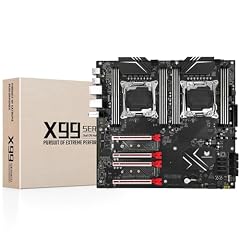
SHANGZHAOYUAN X99 Dual CPU Motherboard LGA 2011-3 Server Motherboard
- Socket
- LGA2011-3
- Form factor
- E-ATX
- Memory type
- DDR4
This board supports two LGA2011-3 Xeon E5 v3/v4 processors and comes from a brand known for affordable server motherboards.
Pros
- Dual CPU support for Xeon E5 v3/v4
- DDR4 memory support
- E-ATX form factor
Cons
- Less mature BIOS and support than larger brands
- Requires ECC memory for maximum stability
Good fit if
- Server builders on a tight budget
- Users who want many cores per dollar
Skip if
- You need a polished, mainstream board
- You dislike dual CPU complexity
Verdict: A budget dual-socket Xeon board for compute-heavy tasks.
8 Best dual-socket LGA2011
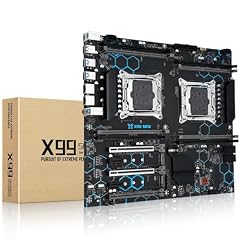
MACHINIST X99 Dual CPU Motherboard LGA 2011-V3
- Socket
- LGA2011
- Form factor
- E-ATX
- Memory type
- DDR4
This Machinist board supports two LGA2011 processors and DDR4 memory, and its name notes support for up to 256GB of RAM, which is useful for memory-hungry applications.
Pros
- Dual CPU support for LGA2011
- Supports up to 256GB of DDR4 (per name)
- E-ATX form factor
Cons
- Socket is LGA2011, not the newer -3 variant
- Dual CPU builds need a lot of power
Good fit if
- Users upgrading from older Xeon system
- Memory-intensive tasks with two CPUs
Skip if
- You need Xeon E5 v3/v4 support
- You want a single-socket board
Verdict: A solid dual-socket LGA2011 board for DDR4 builds.
9 Best dual-socket LGA2011-3 with DDR4

SHANGZHAOYUAN X99 MD8 Dual CPU Motherboard Intel LGA 2011-V3 DDR4 E-ATX
- Socket
- LGA2011
- Form factor
- E-ATX
- Memory type
- DDR4
A dual CPU LGA2011-3 board from Shangzhaoyuan, it offers DDR4 support and a similar feature set to the other dual-socket options here.
Pros
- Dual CPU support for LGA2011-3
- DDR4 memory support
- E-ATX form factor
Cons
- Brand reputation is less established
- Some features may be limited compared to Supermicro
Good fit if
- Users who want dual LGA2011-3 on a budget
- Homelab builders
Skip if
- You need premium build quality
- You prefer a single socket
Verdict: Another dual-socket LGA2011-3 board for server builds.
10 Best legacy LGA1366

This Supermicro board is for the old LGA1366 socket and supports up to 144GB of DDR3 (as the name indicates), making it a niche option for vintage systems.
Pros
- Supports LGA1366 Xeon processors
- Supermicro reliability
- DDR3 memory (stated in name)
Cons
- Memory type is DDR3, not DDR4
- Old platform with no modern features like M.2 or USB4
Good fit if
- Collectors or hobbyists with old Xeon CPUs
- Legacy testbeds
Skip if
- You need a modern motherboard
- You want DDR4 support
Verdict: A legacy E-ATX board for those working with LGA1366 Xeons.
Specifications side by side
| # | Motherboard | Socket | Form factor | Memory type |
|---|---|---|---|---|
| 1 | MSI MEG X870E GODLIKE MAX | AM5 | E-ATX | DDR5 |
| 2 | GIGABYTE TRX50 AERO D | sTR5 | E-ATX | DDR5 |
| 3 | SUPERMICRO MBD-X12SPA-TF-O E-ATX Server Motherboard LGA 4189 C621A | LGA4189 | E-ATX | DDR4 |
| 4 | Supermicro EATX Extended ATX DDR4 LGA 2011 Motherboard X10DRH-CT-O | LGA2011 | E-ATX | DDR4 |
| 5 | Wisoqu MS S1561 Server Motherboard | LGA2011-3 | E-ATX | DDR4 |
| 6 | MACHINIST Dual CPU Motherboard X99-D8-MAX Intel LGA 2011-3 | LGA2011-3 | E-ATX | DDR4 |
| 7 | SHANGZHAOYUAN X99 Dual CPU Motherboard LGA 2011-3 Server Motherboard | LGA2011-3 | E-ATX | DDR4 |
| 8 | MACHINIST X99 Dual CPU Motherboard LGA 2011-V3 | LGA2011 | E-ATX | DDR4 |
| 9 | SHANGZHAOYUAN X99 MD8 Dual CPU Motherboard Intel LGA 2011-V3 DDR4 E-ATX | LGA2011 | E-ATX | DDR4 |
| 10 | Supermicro X8DTN+ Motherboard | LGA1366 | E-ATX | not stated |
How the picks were chosen
We pulled every E-ATX motherboard currently listed in our catalog, which gave us 10 models after near-duplicates were folded in. We kept all 10 because the pool is small. We compared each board on socket support, memory type (DDR4 or DDR5), and features visible in the product name, such as dual CPU support or integrated IPMI. We did not test any unit; all claims come from the specifications stated by the seller or the manufacturer's published information. We did not rely on customer reviews. The prices shown on each product card are read live from the store listing at the time of writing and may change.
Picking the right one for you
Socket and CPU compatibility
The socket determines which processor you can install. Each E-ATX board is built for a specific CPU family: AM5 for current AMD Ryzen, sTR5 for AMD Threadripper, LGA4189 for Intel Xeon Scalable, and the older LGA2011, LGA2011-3, or LGA1366 for previous generations. Match the board to the CPU you already own or plan to buy, and check that the chipset (from the manufacturer's spec page) supports the features you need.
Memory type and capacity
Most boards here use DDR4 memory, while the MSI and GIGABYTE boards use DDR5. DDR5 offers higher bandwidth but is more expensive, and only works with newer processors. Also consider how many memory slots you need. Some server boards support up to 256GB of RAM, which matters for virtualization or large datasets. Always verify the exact memory configuration on the maker's product page, as the pool only lists the memory type, not slot count.
Form factor and case size
E-ATX extends beyond standard ATX, so you need a case with at least 12 inches of width to fit these boards. Measure your case's standoff layout before buying. Some cases marketed as E-ATX compatible may only support the short E-ATX variant, so check the board's dimensions against the case specification. The extra space often comes with more PCIe slots and memory slots, but it also limits case choices.
Server vs desktop features
Many E-ATX boards are server-oriented: they use Xeon processors, support dual sockets, and may include IPMI for remote management. Desktop boards like the MSI are built for gaming and overclocking, with features like RGB, a dashboard display, and fast Wi-Fi. Decide whether you need server-grade reliability and remote management or consumer-facing extras. IPMI is a specific controller that allows you to manage the board over the network, which is a must for headless servers.
Networking and I/O
Look at the integrated networking options, which are often stated in the product name. The GIGABYTE board includes 10GbE and Wi-Fi 7, while others may have standard 1GbE. For server builds, 10GbE or an IPMI port can save you from buying separate adapters. Also check for USB4, which provides up to 40Gbps transfer speeds and can connect displays and storage. USB4 is based on the USB4 specification and is backward compatible with older USB standards.
Questions
What is the difference between E-ATX and standard ATX?
E-ATX (Extended ATX) boards are wider than standard ATX, usually 12 inches long versus 9.6 inches for ATX. They offer room for more memory slots, PCIe slots, and often dual sockets or more elaborate power delivery. Because of their size, they require a larger case that specifically supports E-ATX. Standard ATX cases often lack the mounting holes to secure an E-ATX board.
Can I use an E-ATX motherboard in a regular ATX case?
Most ATX cases do not have enough clearance or standoff positions for an E-ATX board. Some larger ATX cases claim E-ATX compatibility, but you must measure the width and compare it with the board's dimensions. Check the case's official specification for the maximum motherboard size. If the case doesn't support E-ATX, the board may not fit or may touch the cable routing holes.
Is E-ATX worth it for a gaming PC?
For most gaming PCs, a standard ATX board provides the same features and performance as an E-ATX board. E-ATX is beneficial when you need multiple GPUs, many M.2 drives, or a dual-socket server. The MSI MEG X870E GODLIKE MAX in this list is a gaming-focused E-ATX board with a dashboard display, but it may be more than you need unless you value those extras or plan to heavily overclock.
What does dual CPU mean and do I need it?
Dual CPU motherboards have two processor sockets, allowing you to install two Xeon or other supported CPUs. This doubles the core count and memory capacity for tasks like rendering, virtualization, and scientific computing. However, dual CPU builds require a server operating system, ECC memory (often), and more power. If you do not have a workload that benefits from many cores, a single CPU board is simpler and cheaper.
Revision notes
- : First published.